
FactcoveryFactcovery
Search facts and topics…
HomeFactsTopicsRandomHistoryWeirdCultureFunGeographyAnimalsBiologyAstrologyNatureAstronomyEconomySpace
Home/Facts/Capricornus Hosts A Stunning Globular Cluster, M30
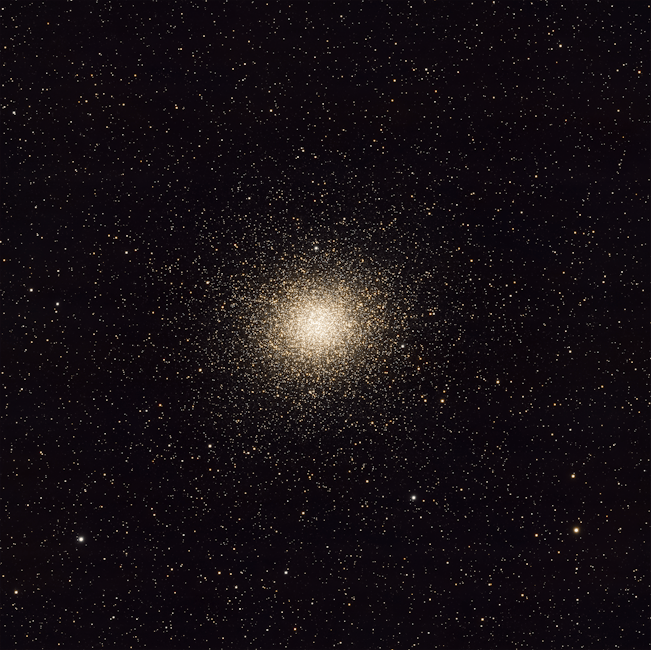
Capricornus Hosts A Stunning Globular Cluster, M30
Capricorn

Capricornus Hosts A Stunning Globular Cluster, M30

Messier 30 is a densely packed cluster of ancient stars located about 27,000 light-years away within the constellation Capricornus. It is notable for having undergone a core collapse, where its central region became extremely dense, creating a compact stellar core.

Source

https://en.wikipedia.org/wiki/Messier_30

Details

Published
March 29, 2026
views
126
CapricornAstronomySpaceM30Globular ClusterCapricornusDeep-Sky Object

Advertisement

Related Facts

Weird23 views

Uranus Rotates at a 98° Tilt — Each Season Lasts 21 Years

Uranus has an axial tilt of 97.77°, meaning it essentially rolls around the Sun on its side. This extreme tilt means each pole faces the Sun for 42 continuous years at a time. With a year spanning 84 Earth years, each of Uranus's four seasons lasts approximately 21 years.

Weird27 views

The Average Color of the Universe Is a Pale Beige

In 2002, astronomers Karl Glazebrook and Ivan Baldry at Johns Hopkins University calculated the average color of the universe by analyzing light from over 200,000 galaxies. The result is a pale, creamy beige — officially named 'Cosmic Latte'.

Weird25 views

The Sun Contains 99.86% of the Solar System's Total Mass

The Sun accounts for approximately 99.86% of all the mass in our solar system. Of the remaining 0.14%, Jupiter alone makes up about 71%, leaving all other planets, moons, asteroids, and comets sharing a tiny sliver. Earth represents just 0.0003% of the solar system's total mass.

Weird20 views

Astronauts Cannot Cry in Space

In microgravity, tears don't stream down a face — they form liquid bubbles that cling to the eye. The tear pools on the eyeball and can cause stinging. Chris Hadfield famously demonstrated this on the International Space Station, describing the sensation as 'your eyes cry but the tears don't fall'.

Advertisement

✦ Factcovery

TopicsAboutPrivacyContactFeedback

© 2026 Factcovery. All rights reserved.