
Alpha · Android

Help shape Factcovery — keep Premium forever

Join the alpha, lock in lifetime perks before launch.

  • Premium forever
  • Zero ads
  • Live feature drops
Get early access
Solar SystemTopic

Solar System

11 facts

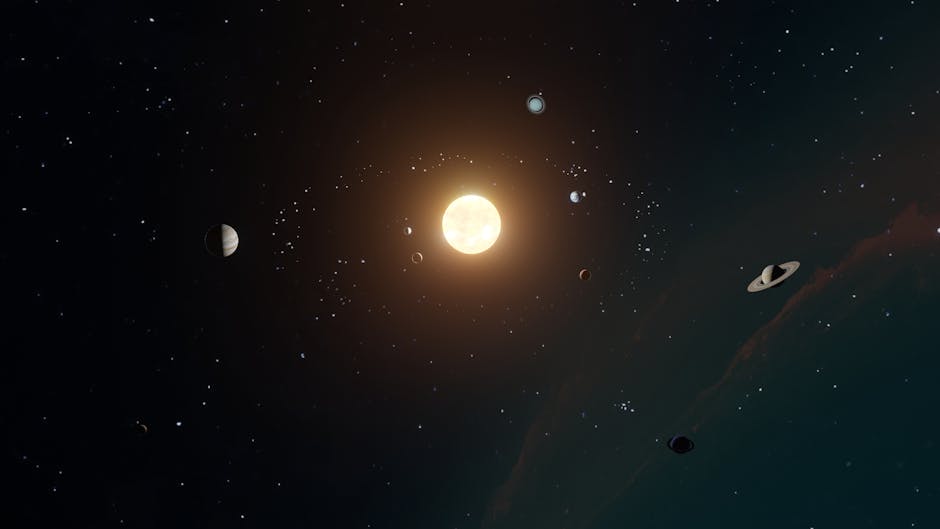
Explore the wonders of our Solar System! Discover fascinating facts about planets, moons, asteroids, and the Sun in this cosmic journey.

  • Crazy88 views

    Diamonds Are Believed To Rain On Saturn And Jupiter

    Scientists theorize that in the intense atmospheric conditions of gas giants like Saturn and Jupiter, lightning storms convert methane into soot. This soot is then compressed into graphite and further into diamonds as it falls through the planet's dense atmosphere, potentially forming oceans of liquid carbon.

  • Cool85 views

    Uranus And Neptune Are Called Ice Giants

    Unlike the gas giants Jupiter and Saturn, Uranus and Neptune are primarily composed of "ices" — water, ammonia, and methane — in their interiors, rather than just hydrogen and helium. These icy materials are compressed into a super-dense fluid state beneath their frigid, turbulent atmospheres.

  • Aries Zodiac125 views

    The Planet Mars, Aries' Ruler, Has a 687-Day Orbit.

    While Aries is associated with quick action and impulsiveness, its ruling planet Mars takes nearly two Earth years to complete one orbit around the Sun. This long cycle influences longer-term drives and ambitions.

  • Science113 views

    Our Solar System Travels At Over 500,000 Miles Per Hour

    Our solar system, including the Sun and all its planets, orbits the center of the Milky Way galaxy at an incredible speed of about 828,000 kilometers per hour (514,000 mph). This swift galactic journey takes approximately 230 million years to complete.

  • Space104 views

    Venus Rotates Backwards and Slower Than It Orbits the Sun

    Venus rotates clockwise, opposite to most planets, and its day is longer than its year. It takes 243 Earth days to complete one rotation, but only 225 Earth days to orbit the sun, making for a truly unique celestial rhythm and an extremely long day.

  • Astronomy108 views

    It Rains Diamonds on Neptune and Uranus

    Scientists believe that under the extreme pressures and temperatures deep within these ice giants, methane breaks down, and carbon atoms are compressed into solid diamonds that then "rain" down through the planets' mantles.