
Alpha · Android

Help shape Factcovery — keep Premium forever

Join the alpha, lock in lifetime perks before launch.

  • Premium forever
  • Zero ads
  • Live feature drops
Get early access
DinosaurTopic

Dinosaur

20 facts

Dinosaurs dominated Earth for over 165 million years. From feathered raptors to colossal sauropods, these incredible animals shaped the planet — and their descendants still fly among us today.

  • Dinosaur44 views

    Some Sauropod Dinosaurs Laid Eggs Smaller Than a Football Despite Weighing 70 Tonnes

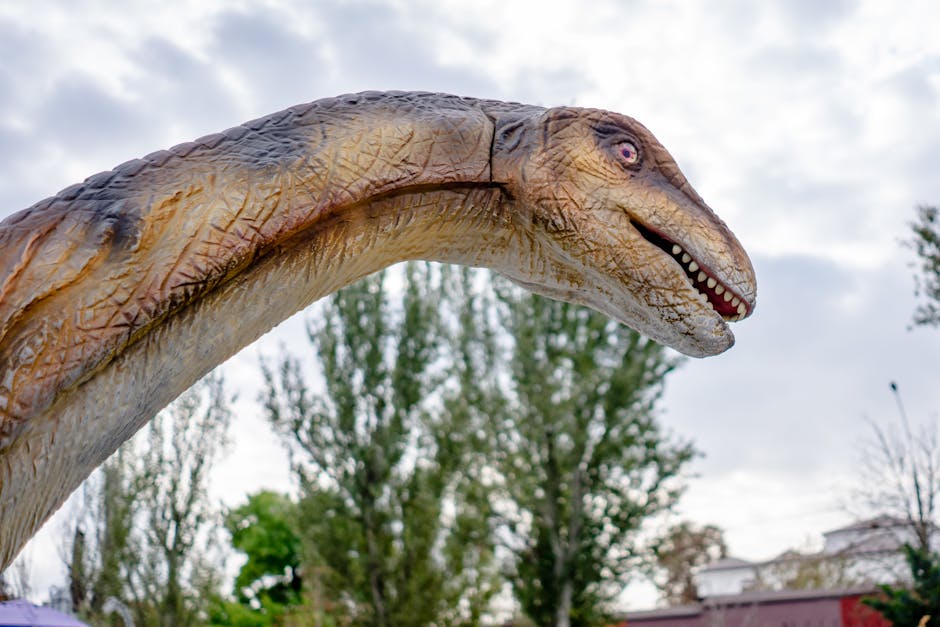
    Despite being the largest land animals ever, sauropod dinosaurs laid surprisingly small eggs relative to their body size. The largest known dinosaur eggs (Macroelongatoolithus) were about 45–60 cm long, yet the adults that laid them might weigh 40–70 tonnes. This is because eggshell thickness is limited by the need for oxygen exchange — a larger egg would suffocate the embryo. Hatchlings were therefore tiny compared to adults, growing at astonishing rates throughout their lives.

  • Dinosaur38 views

    The K-Pg Mass Extinction Wiped Out 75% of All Species, Not Just Dinosaurs

    The Cretaceous-Paleogene (K-Pg) extinction event 66 million years ago did not only kill non-avian dinosaurs — it eliminated approximately 75% of all species on Earth, including many marine reptiles (mosasaurs, plesiosaurs), flying pterosaurs, ammonites, and countless plant and invertebrate species. Survivors included small mammals, birds, crocodilians, turtles, snakes, and frogs — groups that could shelter underground, burrow, or tolerate the sudden darkness and cold.

  • Dinosaur44 views

    Pterosaurs Were Not Dinosaurs — They Were Flying Reptile Cousins

    Despite being featured alongside dinosaurs in popular media, pterosaurs were not dinosaurs. They were archosaurs — the same broad group that includes dinosaurs and crocodilians — but evolved flight independently on their own lineage. The first pterosaur appeared around 228 million years ago. The largest, Quetzalcoatlus, had a wingspan of up to 10–11 metres and stood as tall as a giraffe, making it the largest known flying animal in Earth's history.

  • Dinosaur46 views

    The Longest Dinosaur Name Has 23 Letters: Micropachycephalosaurus

    Micropachycephalosaurus ('tiny thick-headed lizard') from Late Cretaceous China holds the record for the longest dinosaur name at 23 letters. Ironically, it was one of the smallest known dinosaurs, estimated at under 1 metre long. It belonged to the pachycephalosaur family and was first described in 1978 by Chinese palaeontologist Dong Zhiming. Its name is a paradox — meaning small, yet bearing one of the most unwieldy labels in all of palaeontology.

  • Dinosaur41 views

    Pachycephalosaurus Had a 25 cm Dome Skull That May Have Been Used for Head-Butting

    Pachycephalosaurus wielded a dome-shaped skull up to 25 centimetres thick, made of solid bone. Debate continues about whether it used this for head-butting rivals (like bighorn sheep) or flank-butting. Analysis of bone texture reveals healed lesions consistent with high-impact head-to-head contact. Some researchers suggest the domes also served as species and sex recognition signals, as they varied greatly in size and shape between individuals.

  • Dinosaur41 views

    Dinosaurs Lived on Every Continent, Including Antarctica

    Dinosaur fossils have been found on all seven continents, including Antarctica. The Antarctic continent, once part of the supercontinent Gondwana, was warmer during the Mesozoic era and supported a variety of dinosaur species. Fossils of Cryolophosaurus ('frozen crested lizard'), a large theropod, were discovered there in 1991. During the Triassic period, all continents were joined as Pangaea, allowing dinosaurs to spread across the entire land mass.

  • Dinosaur38 views

    Microraptor Had Four Wings and Was One of the First Gliding Animals

    Microraptor, a crow-sized dromaeosaurid from Early Cretaceous China (125 Ma), had flight feathers on both its forelimbs and hind limbs — giving it four functional wings. Studies of its feathers and anatomy suggest it could glide between trees in a biplane configuration. Remarkably, stomach contents reveal it ate fish, birds, and lizards, making it one of the most versatile predators of its size in dinosaur history.

  • Dinosaur52 views

    Ankylosaurs Had Tail Clubs That Could Shatter Bone

    Ankylosaurus, the armoured dinosaur, ended its 8-metre body with a massive bony tail club weighing up to 50 kg. Biomechanical modelling shows it could swing this weapon at velocities capable of shattering bone, easily snapping the ankle bones of an attacking T. rex. The club formed from fused vertebrae and skin ossifications. Nodosaurs, closely related ankylosaurs, lacked tail clubs but had long shoulder spikes instead.

  • Dinosaur34 views

    Triceratops Had Up to 800 Teeth and Replaced Them Throughout Its Life

    Triceratops was one of the last non-avian dinosaurs to roam Earth before the mass extinction. It had a battery of up to 800 teeth arranged in stacks, constantly being replaced as old ones wore down from chewing tough vegetation — similar to shark teeth. Its three horns and large frill were likely used for both species recognition and combat, as fossilised skulls show healed puncture wounds from horn-to-horn fighting.

  • Dinosaur40 views

    Maiasaura Was a Devoted Parent That Raised Its Young in Nesting Colonies

    Discovered in Montana in 1978, Maiasaura ('good mother lizard') provided the first strong evidence that some dinosaurs were attentive parents. Nesting sites showed dozens of nests grouped together, with hatchlings that had worn teeth — proof that parents brought food rather than abandoning young. Maiasaura herds may have numbered in the thousands, migrating like modern caribou.