
FactcoveryFactcovery
Search facts and topics…
HomeFactsTopicsRandomHistoryWeirdCultureFunGeographyAnimalsBiologyAstrologyNatureAstronomyEconomySpace
Home/Facts/Elephant Calves Suck Their Trunks Like Babies Suck Thumbs
Elephant Calves Suck Their Trunks Like Babies Suck Thumbs
Elephant

Elephant Calves Suck Their Trunks Like Babies Suck Thumbs

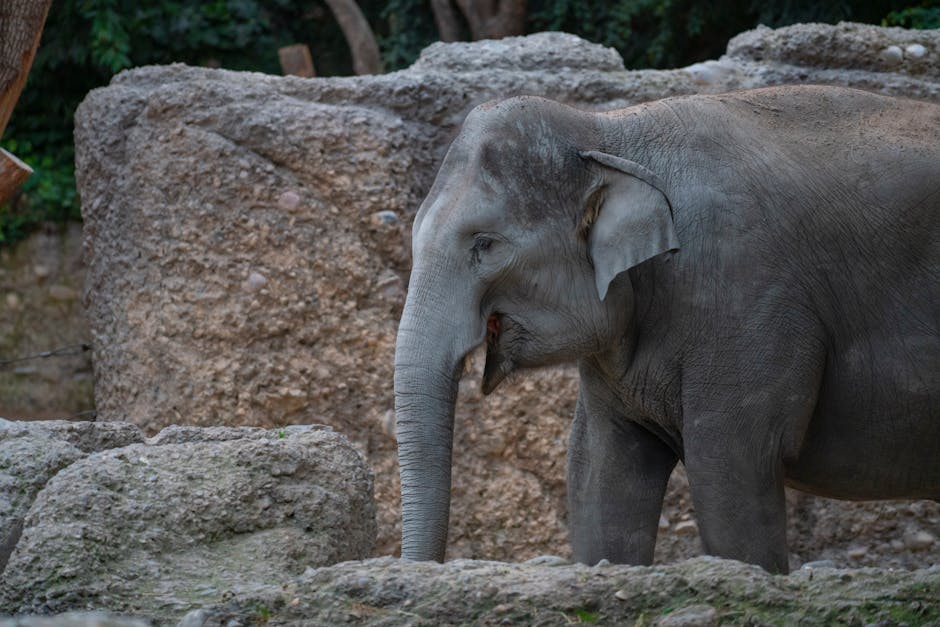
Young elephant calves frequently suck on their trunks as a self-soothing behavior — much like human infants sucking their thumbs. It takes years to develop full muscle control over their trunks, which they are born not knowing how to use.

Source

https://www.elephantvoices.org/elephant-news-a-media/elephant-facts.html

Details

Published
April 2, 2026
views
108
ElephantAnimalsBiologyFun

Advertisement

Related Facts

Weird56 views

Cats Have a Hidden Third Eyelid

Cats, like most birds, fish, reptiles, and amphibians, possess a nictitating membrane — a translucent third eyelid that moves horizontally across the eye from the inner corner. Normally hidden in healthy, alert cats, it becomes visible when a cat is drowsy, ill, or under stress. Humans lost this structure through evolution.

Weird52 views

Rubber Bands Last Longer When Stored in the Refrigerator

Natural rubber degrades primarily through oxidation — a chemical reaction with oxygen in the air. Cold temperatures significantly slow this process. According to van't Hoff's rule, every 10°C drop in temperature roughly halves the reaction rate. Storing rubber bands in the refrigerator (not the freezer) can extend their lifespan by years.

Weird53 views

'Stewardesses' Is the Longest Word Typeable with Only the Left Hand

On a standard QWERTY keyboard, all 12 letters of 'stewardesses' (S-T-E-W-A-R-D-E-S-S-E-S) are located on the left side. This makes it the longest common English word typeable with the left hand alone. The longest right-hand-only word is 'lollipop' at 8 letters.

Weird44 views

Chameleons Change Color to Communicate, Not to Camouflage

Chameleons are not actually great at camouflage — their resting color already blends with their surroundings. Rapid color changes serve primarily as social signals: males flash bright colors during courtship or to threaten rivals, dark tones indicate fear or submission, and bright hues signal excitement. A 2014 study by Stuart-Fox confirmed communication as the primary function.

Advertisement

✦ Factcovery

TopicsAboutPrivacyContactFeedback

© 2026 Factcovery. All rights reserved.